Persona pillar guide
How to standardize release notes across repos and teams using GitHub diffs
NoteshipAI is an AI changelog + README generator from GitHub commit history and file diffs using Claude. It helps engineering managers enforce consistent release documentation across squads.
TL;DR
- • Define one release-note structure used by every repository.
- • Generate drafts from commit + diff context to avoid hand-written inconsistency.
- • Include both technical detail and plain-language summary for non-engineers.
- • Review once, then publish to all stakeholder channels.
Problem
Release notes are late, inconsistent, and hard for non-engineers to consume when every team writes them differently.
Why it happens
- • Teams use different templates and quality standards.
- • Documentation is treated as end-of-sprint overhead.
- • Manual writing creates variable depth and tone across repos.
Options
- Per-team manual release notes in docs tools.
- Central PM-written summaries disconnected from code.
- Template mandate with inconsistent adoption.
- Diff-grounded AI drafts + shared review standard in NoteshipAI.
Recommended workflow
- 1.Define one release-note schema: Summary, Features, Fixes, Breaking Changes, Action Required.
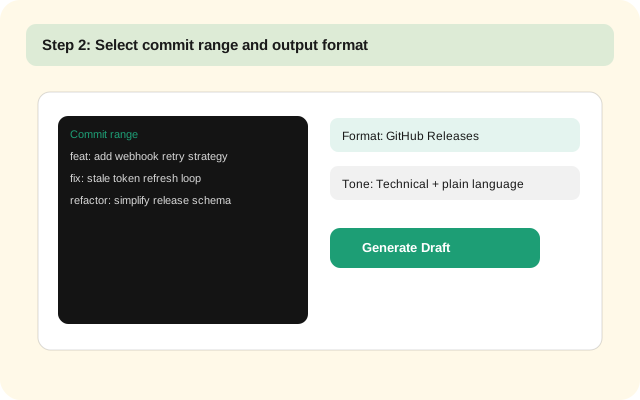
- 2.Per repo, choose commit range for the release train.
- 3.Generate draft in NoteshipAI with technical + stakeholder-friendly phrasing.
- 4.Run one quick quality check by tech lead or EM delegate.
- 5.Publish to GitHub Releases, internal release digest, and customer update channel.
How NoteshipAI solves it
- Standardizes output sections across repositories.
- Maps plain-language summaries back to actual code changes.
- Reduces author-time while preserving auditability.
- Improves cross-team predictability for support, CS, and leadership.
1-minute setup
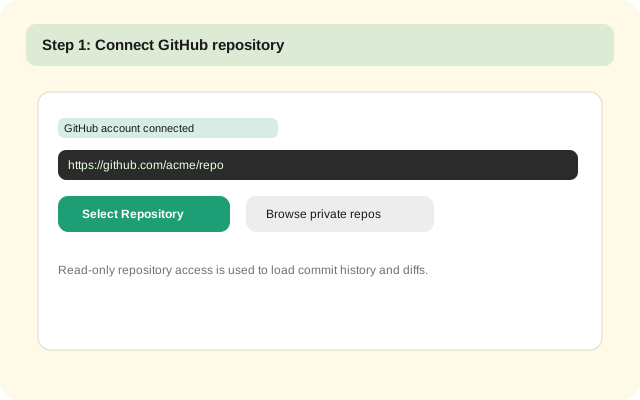
- 1.Connect repository with GitHub OAuth.
- 2.Select release range by commit window, tag, or merged PR sequence.
- 3.Generate changelog and README draft with Claude from real diffs.
- 4.Review sections for tone and audience clarity.
- 5.Publish to GitHub Releases, CHANGELOG.md, and README.md.
Screenshots
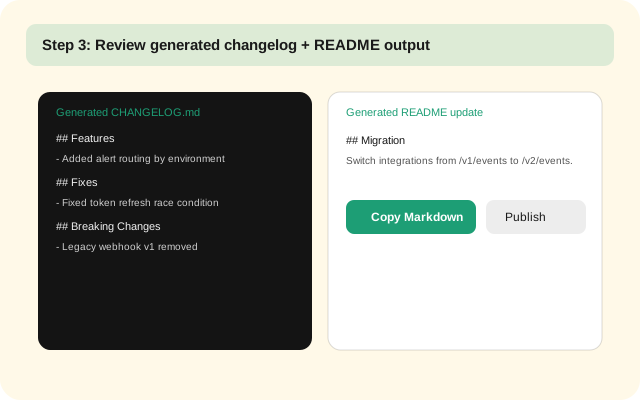
Example: NoteshipAI-generated changelog from commit diffs
Generated CHANGELOG.md
## Features
- Added Slack alert routing by environment with fallback channel handling.

## Fixes
- Fixed race condition in token refresh middleware under burst traffic.

## Breaking Changes
- Removed legacy webhook payload v1 endpoint. Use /v2/events instead.
Generated README section
## Release Notes Workflow
1. Select commits for current release range.
2. Generate draft changelog in NoteshipAI.
3. Review and publish to GitHub Releases.

## Migration
If you use webhook payload v1, switch to /v2/events before upgrading.
Copy/paste templates
- • Keep a Changelog entry template
- • GitHub release notes format template
- • README update checklist for API/integration changes
FAQ
Is it safe to use NoteshipAI with private repositories?
Yes. NoteshipAI uses GitHub OAuth and only reads repository metadata, commit history, and selected diffs needed to generate changelog/README drafts.
Does NoteshipAI actually read file diffs?
Yes. NoteshipAI generates output from commit history and file-level diffs, not only commit titles.
Does this workflow work with monorepos?
Yes. You can scope commit ranges and focus output on the services or directories included in each release.
Try NoteshipAI
Connect your repo, select commit range, and generate changelog + README drafts from real diffs.